The Most Important Rule: No Photos Inside
Let us begin with the critical information: photography and video recording are strictly prohibited inside the palace buildings. This applies to:
- The Selamlık (state quarters)
- The Harem (private quarters)
- The Ceremonial Hall
- All interior hallways and rooms
This is not a suggestion — it is actively enforced. Guards will ask you to put your phone/camera away if they see you attempting to photograph the interiors. Repeated violations may result in being asked to leave.
Why the Ban?
The photography ban exists to:
- Protect the artifacts: Flash photography can damage fragile textiles, paintings, and gilding over time
- Maintain tour flow: Stopping to photograph in the guided tour disrupts the group and slows the experience for everyone
- Preserve the atmosphere: The palace experience is meant to be immersive — experiencing the rooms without the barrier of a screen
What About the Painting Museum?
The National Palaces Painting Museum (separate building on the grounds) generally permits photography without flash. However, rules may change, so check at the entrance.
Where You CAN Photograph
Everything outside the palace buildings is fair game. And there is plenty to photograph:
The Palace Façade
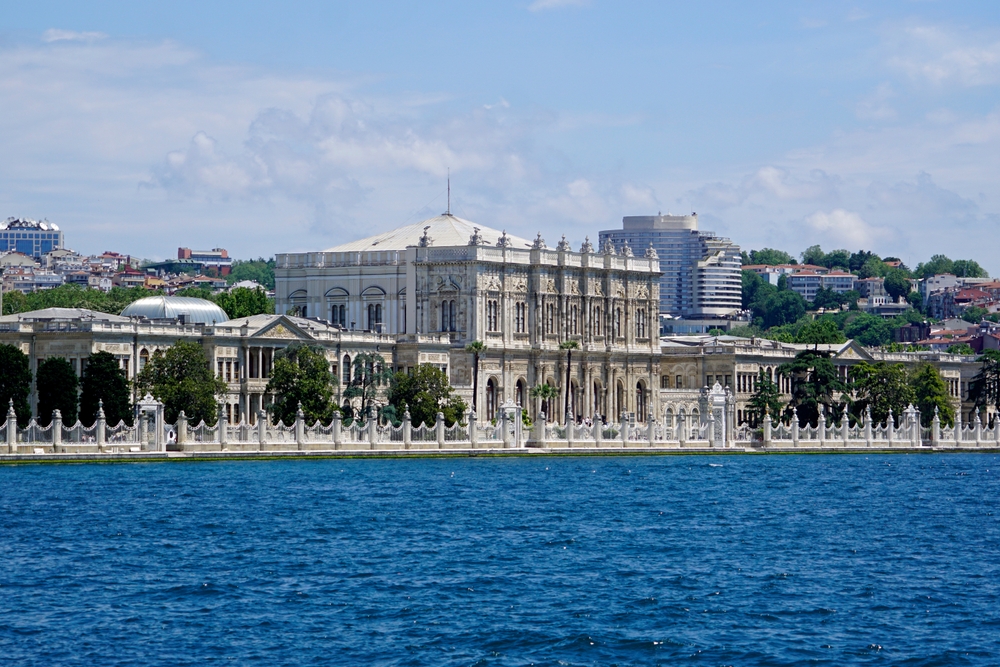
The 600-meter Bosphorus-facing façade of Dolmabahçe is one of Istanbul's most impressive sights:
- Best angle: From the waterfront garden, looking back at the palace with the Bosphorus behind you
- Best time: Late afternoon (the sun illuminates the façade from the west)
- Lens suggestion: A wide-angle lens (14–24mm equivalent) captures the full sweep of the building; a 50mm or 85mm isolates architectural details
The Gate
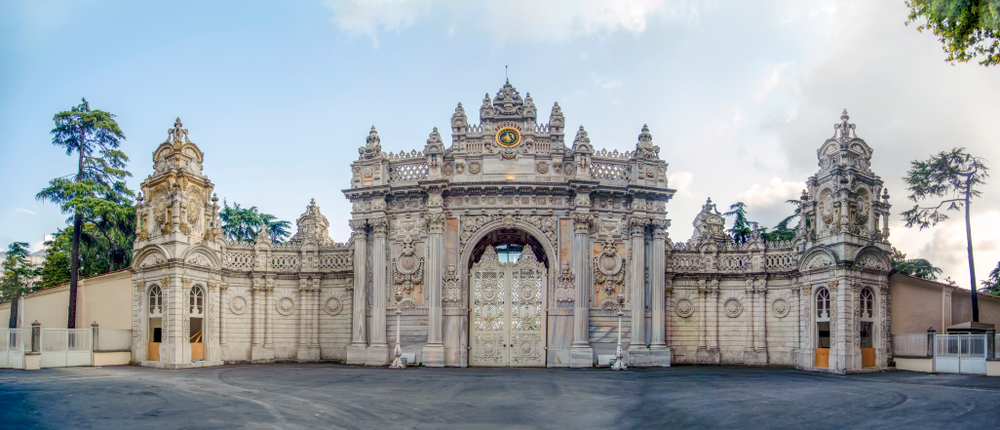
The main ceremonial gate (Saltanat Kapısı) is one of the most ornate structures in Istanbul:
- Details to capture: The intricate ironwork, the gilded royal monogram (tuğra), the lion statues flanking the entrance
- Best angle: Straight-on from across the road, or at a 45-degree angle to capture depth
- Best time: Morning light (the gate faces roughly east-southeast)
The Clock Tower
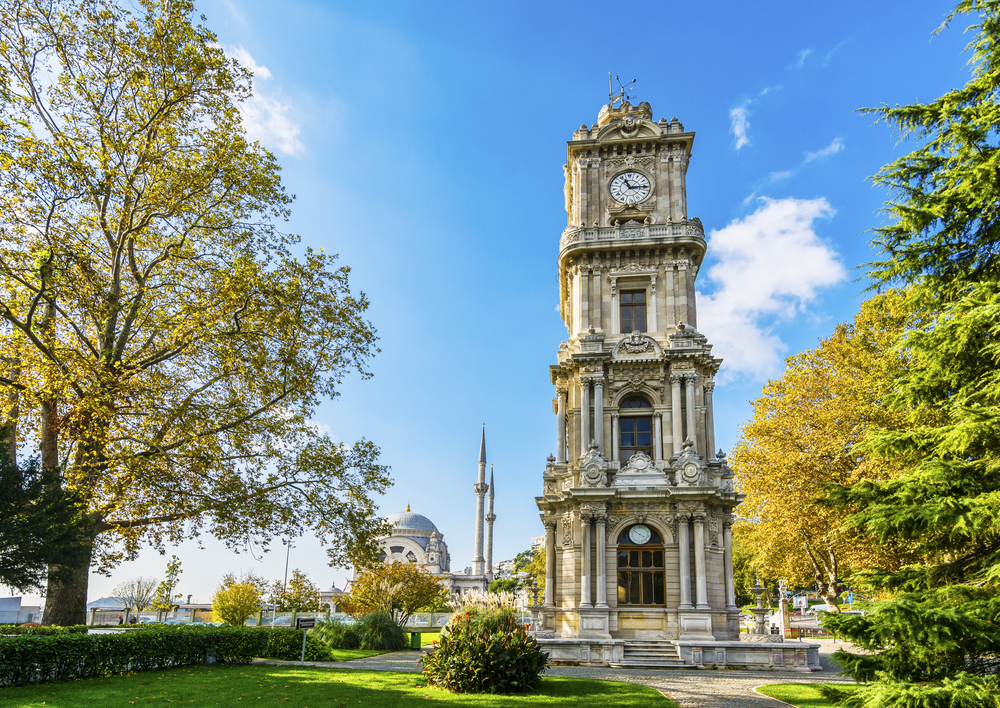
The 27-meter Clock Tower is one of Istanbul's most recognizable landmarks:
- Classic shot: From below, looking up with the tower against the sky
- Context shot: From across the road, with the palace and Bosphorus in the background
- Detail shot: Close-up of the clock faces and ornamental stonework
- Best time: Morning or late afternoon for dramatic side lighting
The Lion Statues
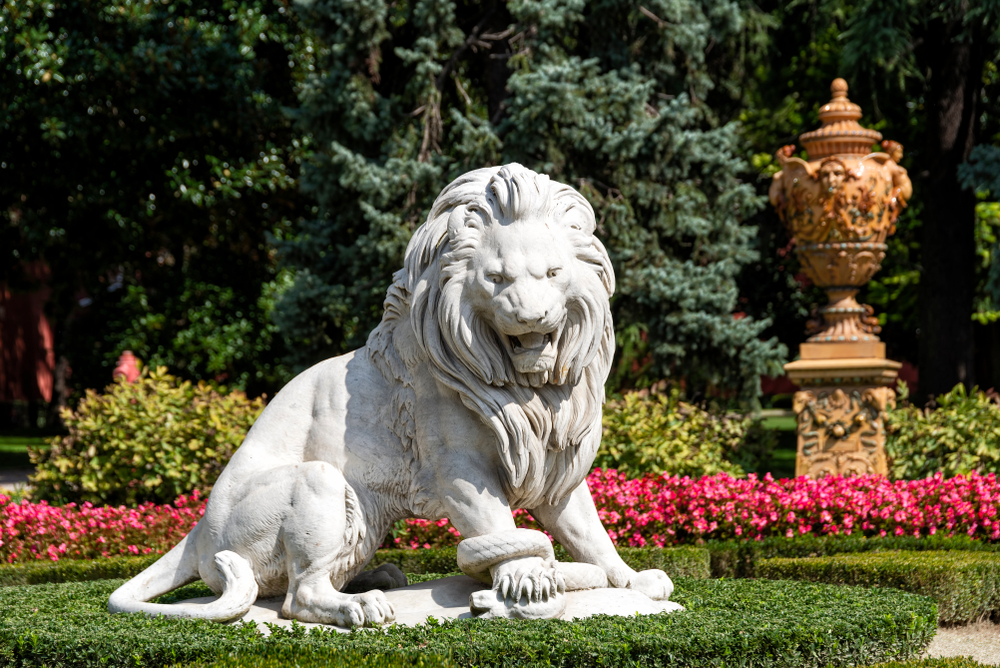
The lion statues at the palace gates make excellent photographic subjects:
- Rich in texture and detail
- Work well in both wide shots (with the gate) and close-ups
- Best in strong directional light (morning or late afternoon)
The Gardens
The formal gardens offer multiple photo opportunities:
- Symmetrical paths: Use leading lines to draw the eye toward the palace
- Fountains: Working fountains add dynamism to garden shots
- Seasonal flowers: Spring (tulips, hyacinths) and summer (roses) offer colorful foregrounds
- Bosphorus backdrop: Frame the gardens with the strait behind them
The Bosphorus Views
The palace's waterfront location provides exceptional views:
- Ships passing on the Bosphorus
- The Asian shore skyline across the water
- Sunset reflections on the water (visible from the garden terraces)
Golden Hour Guide
The quality of light makes or breaks architectural photography. Here is when to shoot:
Morning Golden Hour
- Best for: The gate (east-facing), the Clock Tower, garden details
- Timing: 30 minutes after sunrise to about 90 minutes after sunrise
- Advantage: Fewest tourists, softest light, warm tones
Late Afternoon Golden Hour
- Best for: The Bosphorus façade (west-facing), garden panoramas, atmospheric shots
- Timing: About 90 minutes before sunset to sunset
- Advantage: Warm, golden light on the façade; possibility of dramatic Bosphorus sunset background
Seasonal Variations (approximate)
| Season | Sunrise | Sunset | Best Morning Window | Best Afternoon Window |
|---|---|---|---|---|
| Winter (Dec-Feb) | 7:15 AM | 5:00 PM | 7:30–8:30 AM | 3:30–5:00 PM |
| Spring (Mar-May) | 6:00 AM | 7:30 PM | 6:15–7:30 AM | 6:00–7:30 PM |
| Summer (Jun-Aug) | 5:30 AM | 8:30 PM | 5:45–7:00 AM | 7:00–8:30 PM |
| Autumn (Sep-Nov) | 6:30 AM | 6:00 PM | 6:45–8:00 AM | 4:30–6:00 PM |
From the Water
Some of the best photographs of Dolmabahçe are taken from the Bosphorus itself:
- Bosphorus cruise: Most cruise boats pass directly in front of the palace — have your camera ready
- Ferry crossings: The Beşiktaş-Üsküdar ferry provides excellent angles
- Private boats: For serious photographers, chartering a small boat allows you to position for the perfect shot
Drone Policy
Drones are prohibited over and around Dolmabahçe Palace. This includes:
- The palace building and grounds
- The surrounding gardens
- The adjacent airspace over the Bosphorus near the palace
Turkey has strict drone regulations in general, and flying near government buildings and historical sites carries legal penalties. Do not attempt drone photography at or near the palace.
Social Media Tips
Popular Hashtags
- #dolmabahce
- #dolmabahcepalace
- #dolmabahcesarayi
- #istanbul
- #bosphorus
- #ottomanpalace
- #turkeytravel
Instagram-Worthy Shots
- The gate close-up — the intricate details always perform well
- Clock Tower from below — the dramatic upward angle
- Bosphorus through the garden — palace and water in one frame
- Lion statue portraits — dramatic, sculptural subjects
- The façade at golden hour — warm light on white stone
Equipment Recommendations
- Smartphone: Perfectly adequate for garden and exterior shots; use portrait mode for detail shots
- Wide-angle lens: Essential for capturing the full palace façade
- Telephoto lens: Useful for architectural details and Bosphorus shots from the garden
- Polarizing filter: Reduces glare from the Bosphorus water and enhances sky contrast
- Tripod: Useful for golden hour shots but may not be permitted inside the grounds — check at entrance