Palace Exterior and Grounds
The Grand Facade
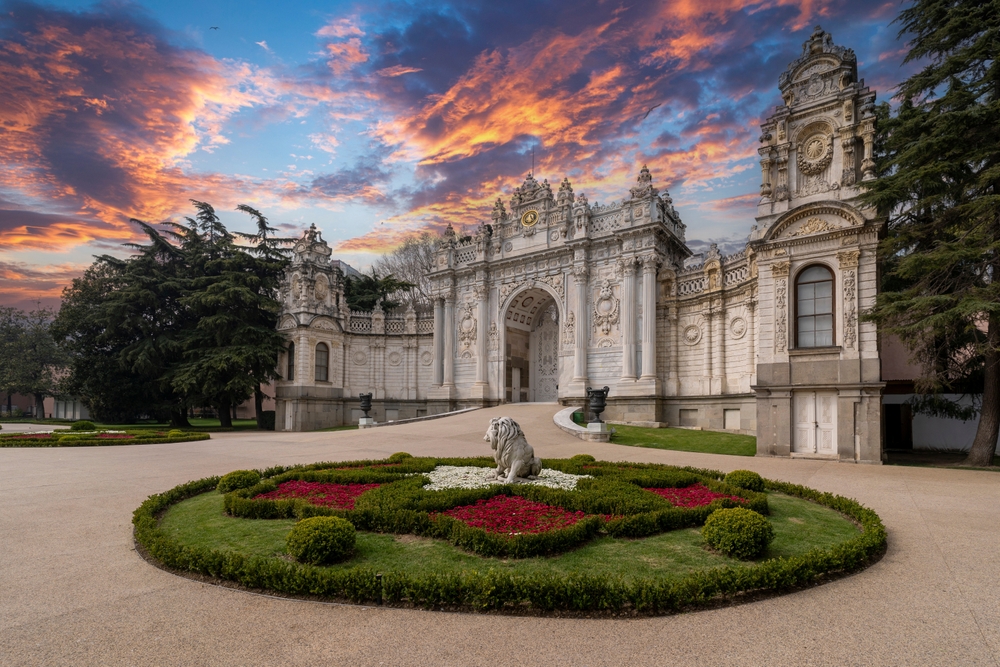
The palace's main facade stretches 600 meters along the European shore of the Bosphorus. Clad entirely in white Marmara marble, the exterior features Corinthian columns, Baroque pediments, and Rococo ornamental details.
View from the Bosphorus
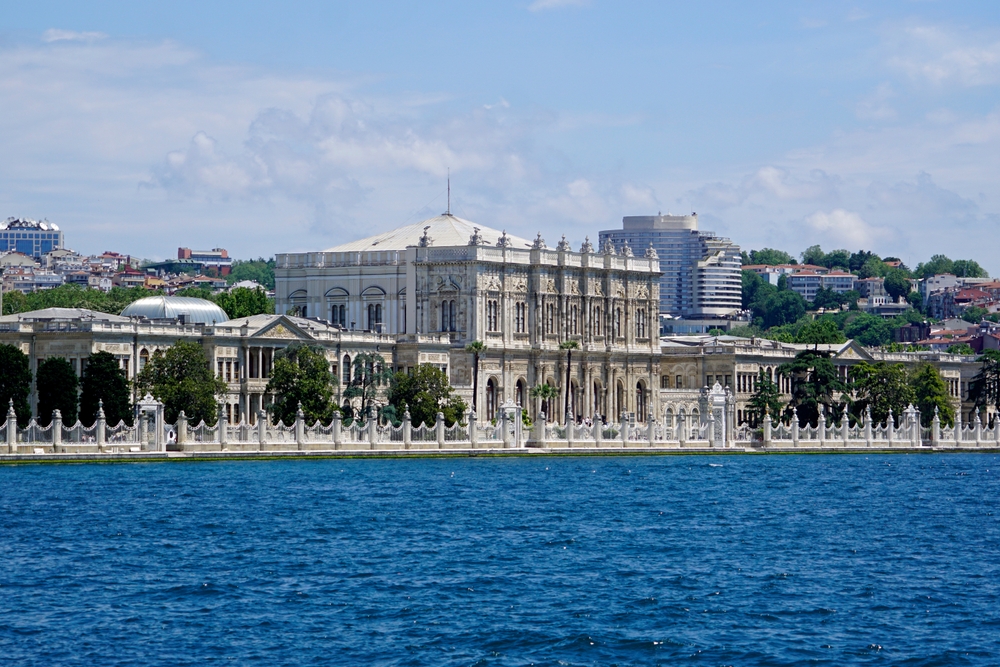
One of the most iconic views of the palace is from the Bosphorus itself. Ferry passengers traveling between the European and Asian sides can see the entire 600-meter facade — a sight that has awed visitors for over 160 years.
The Imperial Gate
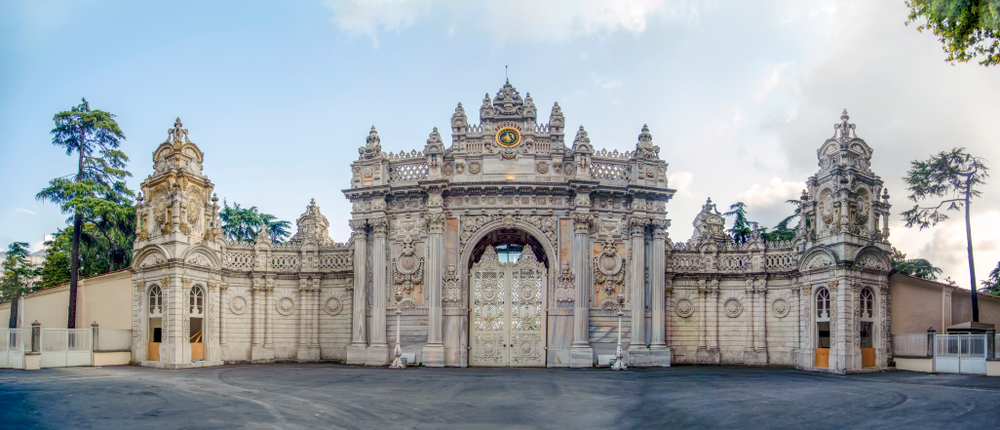
The Treasury Gate (Hazine Kapısı) serves as the main ceremonial entrance from Dolmabahçe Caddesi. The gate's intricate stonework, gilded metalwork, and imperial monogram set the tone for the grandeur within.
The Clock Tower
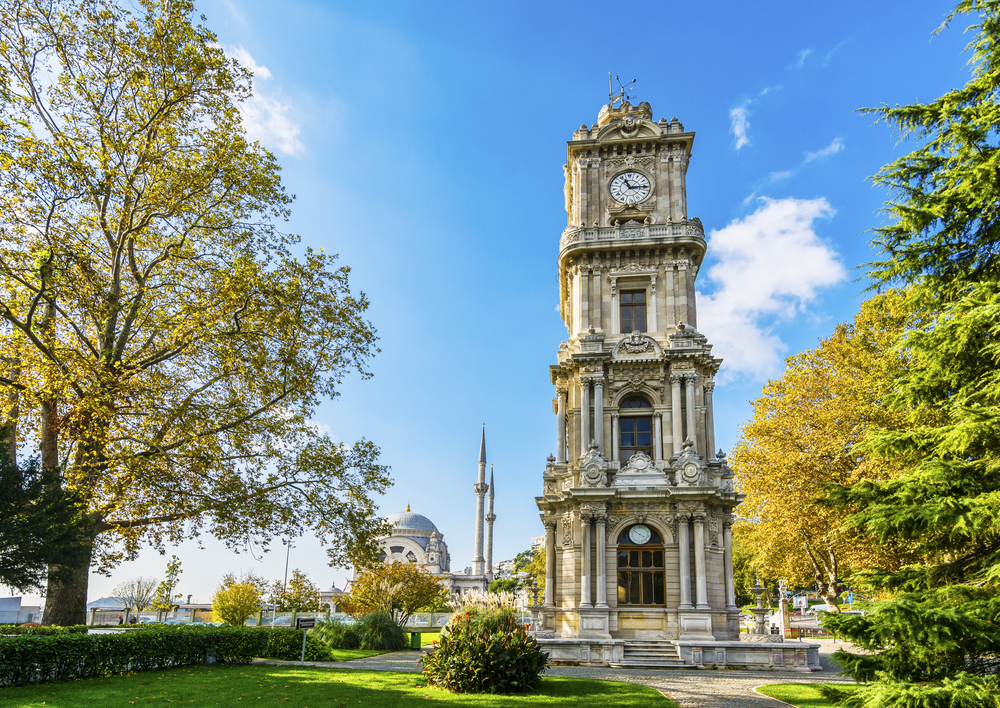
Built between 1890 and 1895 on the orders of Sultan Abdülhamid II, the 27-meter Dolmabahçe Clock Tower is a Neo-Baroque landmark visible from both land and sea. Entry to the clock tower is free.
Lion Statues
Guardian of the Palace
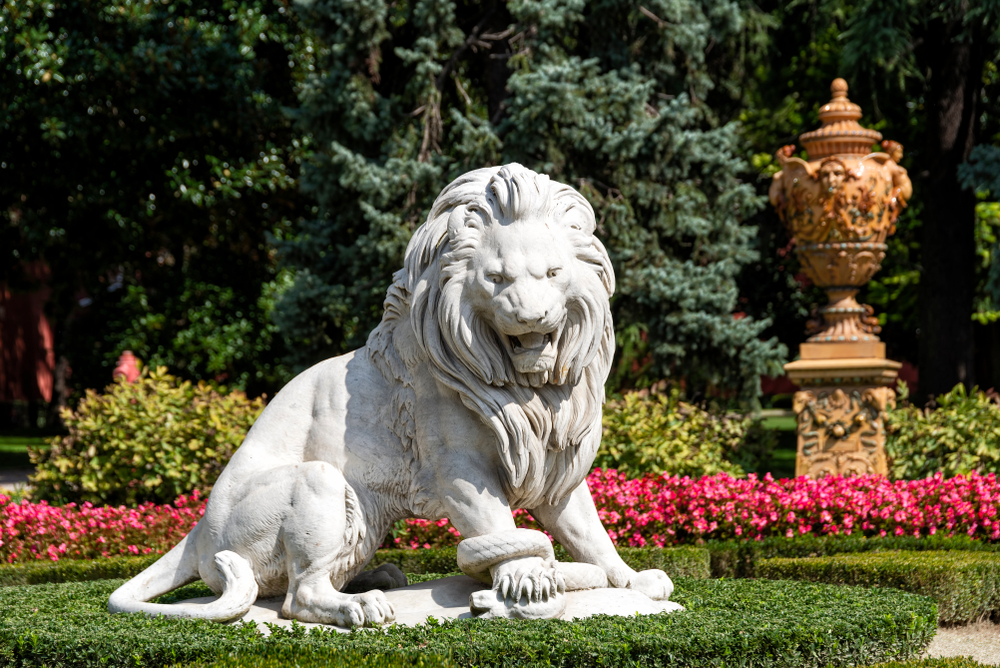
Pairs of marble lion statues guard the approaches to the palace. Lions were traditional symbols of Ottoman imperial power and appear throughout the palace grounds.
A Second Perspective
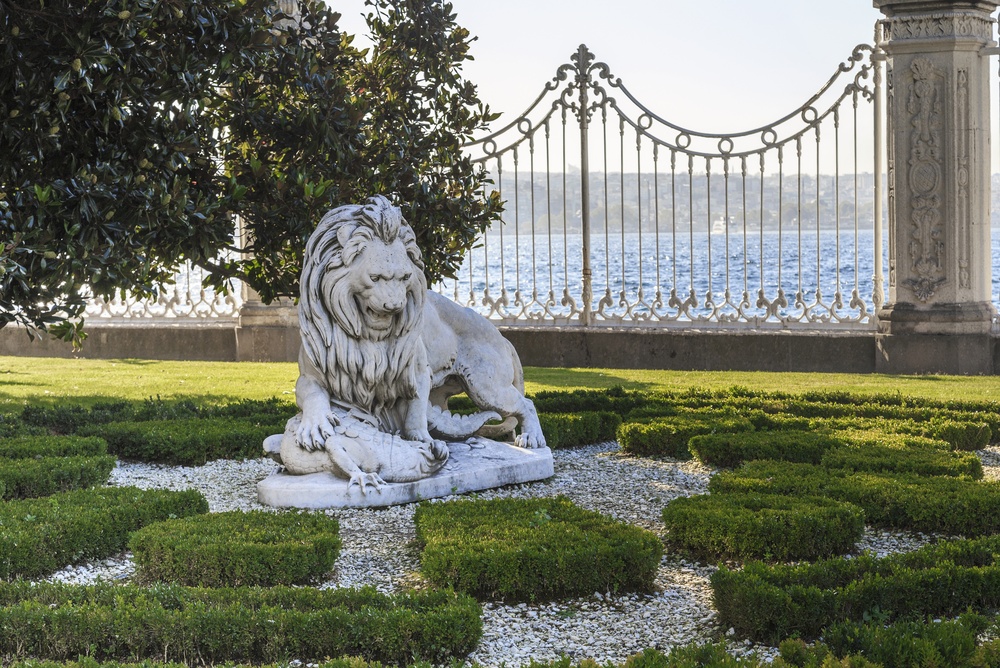
The lion statues at Dolmabahçe are among the most photographed details of the palace complex. Their European sculptural style reflects the palace's overall design philosophy of blending Western and Ottoman artistic traditions.
Photography Tips
- Best light: Morning (09:00–11:00) for the Bosphorus-facing facade
- Best angles: From the waterfront for the full facade; from Dolmabahçe Caddesi for the gate
- Equipment: Wide-angle lenses recommended for exterior and interior shots
- Restrictions: No flash, tripods, or professional equipment inside without permission
- Free areas: Clock tower, gardens, and exterior can be photographed without a ticket