A Neo-Baroque Timepiece
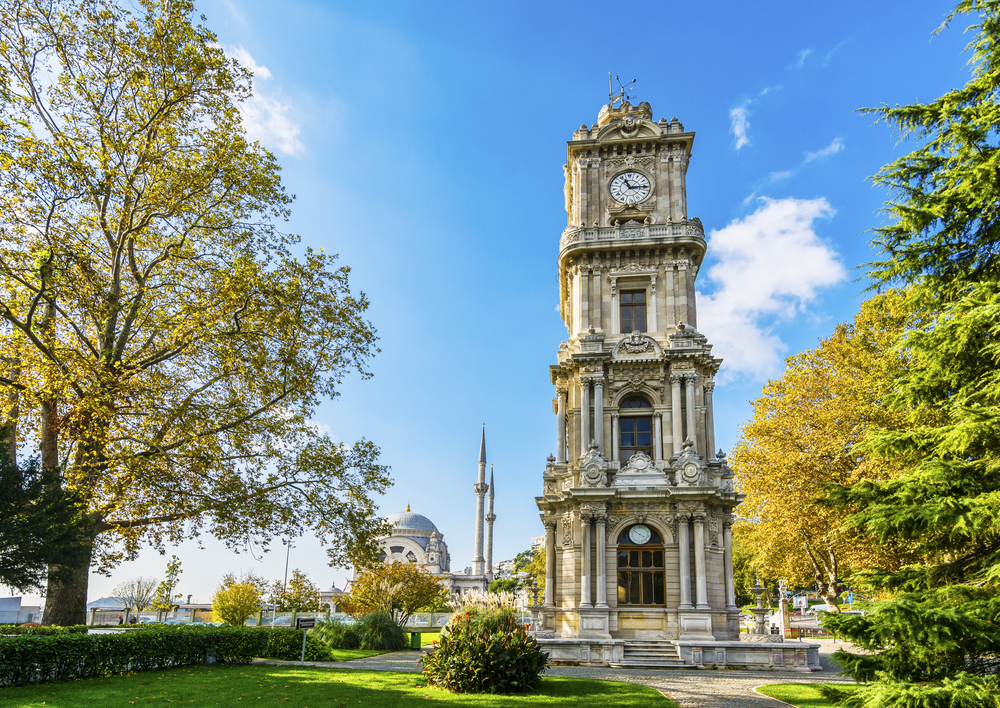
The Dolmabahçe Clock Tower (Dolmabahçe Saat Kulesi) stands in the gardens between the palace and Dolmabahçe Caddesi, serving as both a functional timepiece and an architectural landmark. At 27 meters tall, it is visible from the Bosphorus, from passing ferries, and from the surrounding streets of Beşiktaş.
Built between 1890 and 1895 during the reign of Sultan Abdülhamid II, the tower was designed to complement the palace's Baroque-Eclectic style while asserting the Sultan's presence in a public space. Unlike the palace itself — which was behind walls — the clock tower stood in open view, marking time for the neighborhood and signaling Ottoman modernity.
Architecture and Design
The clock tower rises in four tiers:
- Base level — A square stone plinth with decorative panels and an arched entrance
- Second tier — An octagonal midsection with paired columns and ornamental moldings
- Third tier — A narrower octagonal section with clock faces on each side
- Crown — A domed top with a finial and Ottoman imperial monogram
The architectural style is Neo-Baroque with Eclectic elements, consistent with the late Ottoman period's preference for European-inspired design. The stonework features scrollwork, acanthus leaves, and floral garlands typical of the era.
The Clocks
The tower originally housed a mechanical clock mechanism imported from France. The four clock faces ensured that time was visible from every direction — a practical consideration in an era before wristwatches were common.
The clock mechanism has been maintained and restored several times. Today it continues to keep accurate time, though modern mechanisms supplement the original works.
Historical Context
Sultan Abdülhamid II, who commissioned the tower, had an ambivalent relationship with Dolmabahçe Palace. He moved out of the palace in 1880, preferring the more secure Yıldız Palace on the hill above. Yet he still invested in the Dolmabahçe grounds, adding the clock tower and maintaining the gardens.
The clock tower was part of a broader Ottoman trend: Istanbul's other famous clock towers — at Yıldız Palace, at Nusretiye Mosque, and the Galata Tower's clock — were all built or restored during the late 19th century, reflecting the empire's embrace of punctuality as a symbol of modernity.
Visiting Information
- Cost: Free (no ticket required)
- Hours: Accessible during palace grounds opening hours
- Location: In the palace gardens, between the main building and Dolmabahçe Caddesi
- Photography: Freely allowed
- Duration: 5–10 minutes to view and photograph
- Combine with: Palace gardens walk, then palace tour or Beşiktaş waterfront stroll
The clock tower makes an excellent starting point for a Dolmabahçe Palace visit. Stop here for photos before heading to the ticket office, or visit it for free even if you do not plan to enter the palace itself.